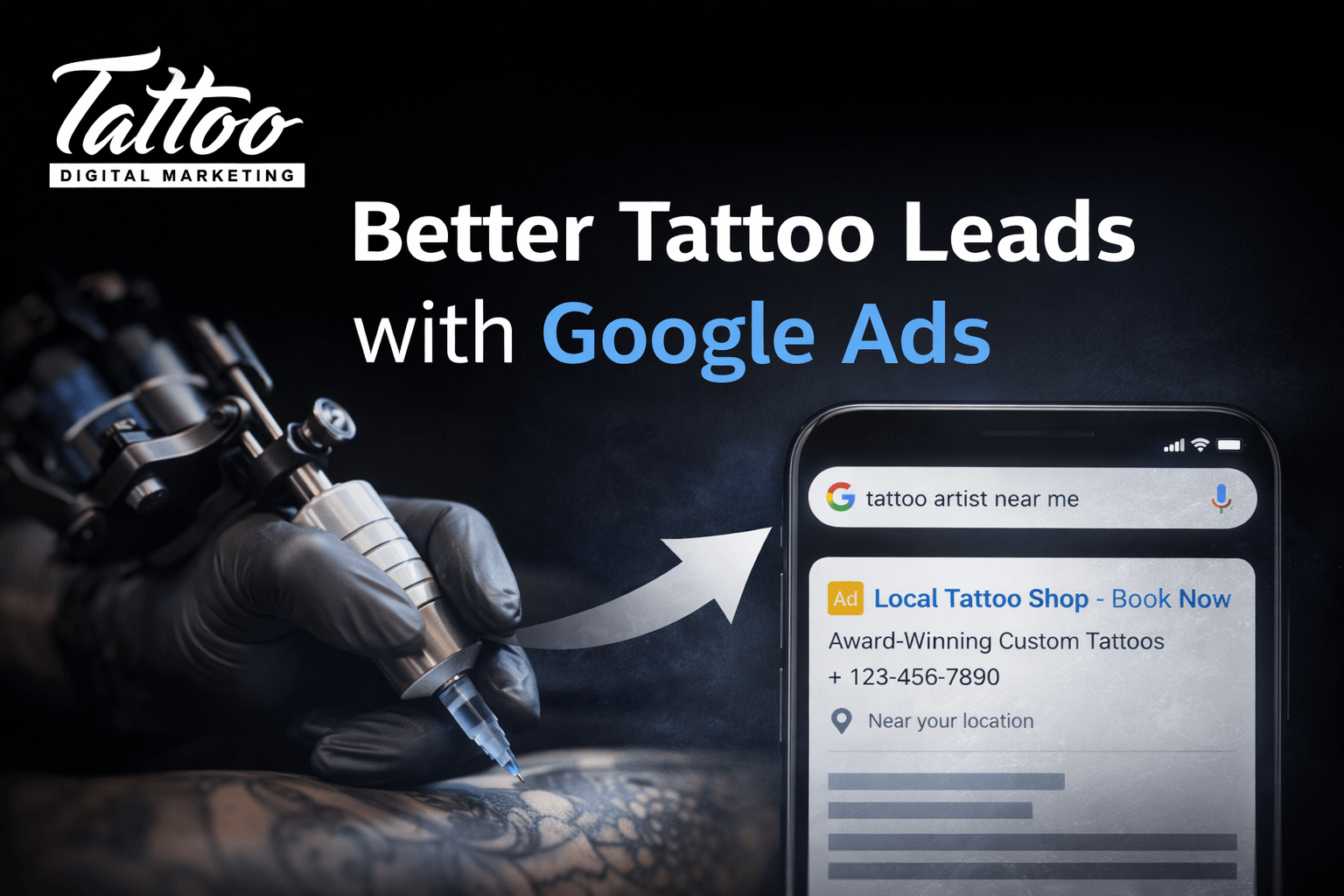
Tattoo shops do not need more clicks for the sake of it. They need inquiries from people who like the work, live close enough to book, and feel ready to move forward. That is where Google Ads can make a real difference.
A strong campaign places the shop in front of someone at the moment they are actively searching for a tattoo artist, a cover-up specialist, or a studio in their area. That timing matters. It gives tattoo shops a better chance to attract people with clear intent instead of casual browsers who never book.
Still, paid traffic only works when the account is built with care. The keywords need to match what real clients search for. The ad needs to reflect the service. The landing page needs to carry the same message through to the inquiry form. When those pieces connect, lead quality improves.
This guide explains how Google Ads can help tattoo shops bring in better leads and how to shape campaigns that support actual bookings.
Why Google Ads Can Improve Lead Quality
Paid ads appear when someone types a need into Google. That makes them very different from channels built around passive attention. A person searching for a tattoo artist is already in motion. The shop does not need to create interest from scratch. It needs to match the right search with the right message.
That is why paid search can work so well for studios.
Search Intent Reveals Who Is Ready
Some searches show curiosity. Others show action. A phrase such as tattoo ideas points to early research. A phrase such as black and grey tattoo artist near me points to someone much closer to booking.
That difference matters. A campaign built around service-led and style-led searches tends to pull in stronger leads than one built around broad traffic terms.
Local Reach Keeps Spend Focused
Tattoo work is local for most studios. If a shop serves one city or a few nearby areas, paid traffic should reflect that. Strong location settings help keep spend close to the studio and reduce clicks from people who are unlikely to travel.
That makes follow-up easier too. A nearby lead is far more useful than someone who likes the work but lives too far away to book.
| Search Example | Likely Intent | Lead Quality Tendency |
|---|---|---|
| Tattoo Ideas For Women | Early research | Lower |
| Fine Line Tattoo Artist Near Me | Active search | Strong |
| Cover Up Tattoo Shop In Manchester | Service-led local search | Strong |
| Best Tattoo Fonts | Inspiration stage | Lower |
Campaign Structure Shapes The Results
Many weak campaigns fail long before the first click. The problem often starts with loose structure. If all services, styles, and search terms sit in one campaign with one message, the ads become vague and the traffic softens.
A better setup creates clearer paths for different kinds of clients.
Group Keywords By Style And Service
Tattoo shops often offer more than one type of work. Fine line, realism, blackwork, cover-ups, script, and flash all speak to different searches. Each one deserves its own focus.
Grouping keywords by style or service helps the ads stay relevant. It also gives the landing page a cleaner role, since the click can go straight to the page that matches the search.
Use Negative Keywords To Filter Weak Traffic
Negative keywords are one of the most useful tools in a tattoo campaign. They help block searches that bring poor-fit traffic and weak leads.
Common examples can include
- Free
- Apprenticeship
- Jobs
- Temporary tattoo
- Tattoo machine
- Supplies
- Tattoo ideas
- Meaning
A shop should review search terms often and trim away phrases that keep producing clicks without producing real inquiries.
Match The Ad To The Search
An ad for cover-ups should speak about cover-ups. An ad for realism should mention realism. A local booking ad should reflect the city the shop serves.
This sounds simple, though many campaigns miss it. Better message match tends to raise the quality of the click before it even lands on the site.
Better Ads Need Better Landing Pages
A good keyword can still produce a poor lead if the page feels generic. The person clicked for a reason. The page should confirm right away that they are in the right place.
That step is where many tattoo shops lose momentum.
Keep The Message Consistent
The landing page should feel like a direct continuation of the ad. If someone clicks an ad about fine line tattoos, they should land on a page that shows fine line work, explains the service, and makes the next step clear.
Sending every click to the homepage often weakens lead quality. It forces the visitor to search for the information they expected to see right away.
Show The Work Clearly
Tattoo clients need visual proof before they inquire. Strong landing pages use portfolio images that match the service or style in the ad. The person should be able to tell, within seconds, that the artist can do the kind of work they want.
That step helps pre-qualify the lead. Someone who likes the page is more likely to send a serious inquiry.
Make The Booking Step Easy
A landing page should not make the next move feel uncertain. It needs one clear action, such as book a consultation, request an appointment, or send in your tattoo idea.
A strong landing page often includes
- Style or service-specific portfolio images
- The city or service area
- A short explanation of the artist or studio
- A simple inquiry form
- Deposit or consultation details
- Visible contact information
Tracking Helps Shops Find The Best Leads
Tattoo shops cannot improve lead quality if every click looks the same in reporting. A page view is not equal to a consultation request. A vague contact form is not equal to a detailed booking inquiry.
Tracking should reflect that difference.
Measure Booking Actions
The strongest campaigns track actions that matter. That can include consultation requests, booking forms, calls from the website, and appointment-related messages.
When the account measures real actions, the data becomes far more useful. It shows which keywords, ads, and pages actually move people toward booking.
Separate Strong Leads From Soft Leads
Not every inquiry has the same value. One message may say how much for this with no detail. Another may include size, placement, preferred dates, and reference images.
Tattoo shops gain much more from tracking the quality of the lead, not only the volume. That helps budget move toward campaigns that bring better conversations.
Let The Data Shape Decisions
Once the account has cleaner data, the campaign gets easier to improve. High-performing keywords can earn more spend. Weak terms can be cut back. Pages that produce stronger leads can guide future ad copy and page structure.
That is where the real improvement happens. Not in the traffic alone, but in how the traffic turns into work.
Common Google Ads Mistakes Tattoo Shops Make
Tattoo shops often struggle with paid ads for avoidable reasons. The platform can work well, though only when the campaign is built around intent and message clarity.
These are some of the most common issues.
Chasing Broad Traffic
Big traffic numbers can look appealing, though broad searches often bring people who are still collecting ideas. Tattoo shops that want stronger leads usually do better with narrower searches tied to style, service, and location.
Sending Everyone To One Page
A realism ad, a walk-in ad, and a cover-up ad should not all lead to the same page. Each click carries a specific need, and the page should answer that need right away.
Using Weak Calls To Action
A vague page leaves too much room for hesitation. Strong calls to action give the visitor a clear next step and make the inquiry feel easier to complete.
Ignoring Search Term Reports
Search term data shows what people actually typed before clicking. Without reviewing that data, shops can keep paying for traffic that never had a serious chance of turning into a booking.
What Better Tattoo Leads Usually Have In Common
Strong tattoo leads often share a few traits. They searched for something specific. They found an ad that matched what they wanted. They landed on a page that showed the right work and gave them a clear next step.
That path feels simple to the client, though it only works when the campaign is built with intent in mind.
These are the traits often seen in stronger leads
- Clear style or service interest
- Location close to the studio
- Visible readiness to book
- Stronger detail in the inquiry
- Better match with the artist’s portfolio
Google Ads Works Best When The Filters Are Strong
Google Ads can be a valuable lead source for tattoo shops, though only when the account is built to guide the right people through a clear path. Strong keywords, local targeting, focused ad groups, better landing pages, and clear tracking all help shape the outcome.
That is the real value of paid search for tattoo studios. It is not about filling the inbox with random messages. It is about helping the right client find the right artist at the right time, then making the booking step feel easy enough to take.