More traffic feels good. More deposits pay the bills.
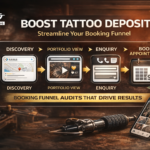
A booking funnel audit shows where interest turns into action, and where it fades. Studio owners often see strong search visibility, solid socials, and healthy reviews. Enquiries still drift away. That gap usually sits in the handoff between “I like this artist” and “I paid my deposit”.
This guide sets out a clear, trackable path from first click to confirmed appointment. It also shows what to measure, what to change, and how to review results without turning marketing into a second job.
Why a Booking Funnel Audit Matters For Tattoo Studios
Most studios already run at full creative capacity. Admin time stays tight. Marketing that only chases reach adds pressure with no payout.
A funnel audit focuses on booking outcomes. It gives owners a plain view of what works, what slows clients down, and what needs a fix.
Here are the key reasons a funnel audit lifts bookings in real studios.
The Real Job Of A Funnel
A funnel does one thing. It moves people from curiosity to commitment.
Clients make decisions in steps. Each step needs a clear next action. If that action feels unclear, hard, or slow, the client keeps scrolling. Another studio wins the slot.
What Counts As A Conversion For Studios
Not every action deserves the same weight. A “like” does not carry the value of a paid deposit.
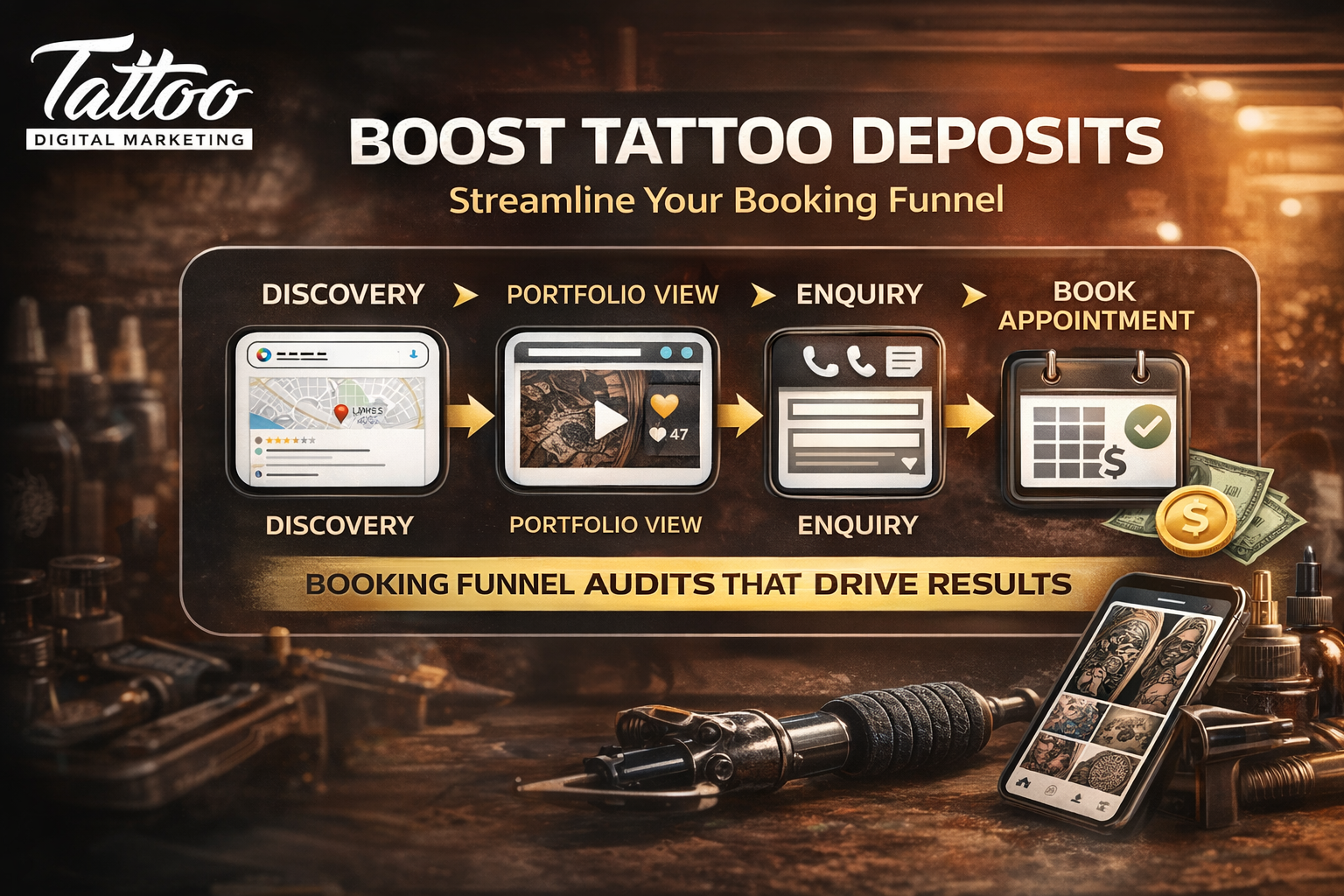
A practical conversion ladder for tattoo studios looks like this.
- Portfolio view that lasts longer than 30 seconds
- Click to call, text, or enquiry form
- Consultation request submitted
- Deposit paid
- Appointment confirmed with date and time
Map The Journey From Search To Deposit
Mapping the path gives structure to every fix. It keeps the audit grounded in real client behaviour.
Start with the client’s first touchpoint. End at the point money changes hands. Anything after that sits in retention, referrals, and reviews.
These are the main stages that shape the journey.
Discovery
Discovery happens in places clients trust for fast answers.
Common entry points include the following.
- Google local pack and Maps
- Organic search results
- Instagram profile link
- TikTok bio link
- Referrals via SMS or DMs
Discovery succeeds when a person sees the studio, understands style, and feels confidence fast.
Consideration
This stage often decides the booking outcome.
Clients compare style, hygiene cues, availability signals, and social proof. They also check how easy it feels to ask a question.
Key pages and assets that drive consideration include these.
- Artist profile pages with clear style tags
- Portfolio galleries grouped by theme
- Pricing guidance that sets expectations
- FAQ pages that reduce friction
- Review snapshots and photo proof
Enquiry
Enquiry starts once a client raises a hand.
That can happen through a form, phone call, text, DM, or booking tool. Friction here kills momentum. Long forms, unclear fields, and missing reply windows push people away.
Aim for one primary enquiry path per page. Secondary options can exist, and the main route needs priority.
Consultation
Consultation covers two things. Fit and next step.
A consult can happen in studio, on the phone, or via video. The goal stays the same. Confirm concept, size, placement, budget range, and timeline. Then move straight to deposit.
A consult needs structure. It also needs a close.
Deposit And Confirmation
Deposit is the turning point. It shows intent and reduces no-shows.
Confirmation means clear time, date, prep notes, and reschedule rules. Payment links must work. Receipts need to land. The client should feel looked after.
Set Up Tracking Without Guesswork
Tracking gives the audit teeth. Without it, changes rely on opinion and memory. That creates endless debate and no direction.
A lean setup covers what matters, and avoids vanity signals. The goal is clarity, not complexity.
Here are the tracking components that support a full funnel view.
GA4 Events That Studios Need
Google Analytics 4 can track real actions with simple event setup.
Focus on events that match booking intent.
- Click to call
- Click to email
- Click to text
- Form start
- Form submit
- Booking link click
- Deposit link click
Use consistent event names across the site. Keep them short. Tie each event to a page group, such as artist pages, portfolio pages, and contact pages.
Call And Message Tracking
Calls and texts often close high-value work. That makes them audit priorities.
Call tracking tools can assign a unique number per source. Text tracking can follow link clicks from SMS flows. Many studios also rely on DMs. Link-in-bio tools can capture those taps and route data to analytics.
Keep staff workflow simple. One inbox system beats scattered replies across personal devices.
Booking Platform Data
Booking tools often hold the missing truth.
Track these fields inside the platform.
- Enquiry date
- Consult scheduled date
- Deposit paid date
- Appointment booked date
- No-show rate
- Reschedule rate
Pull that data weekly. Keep it in one sheet. Treat it as a health report.
Funnel Tracking Scorecard Table
| Funnel Stage | Signal To Track | Tool Source | Owner Action |
| Discovery | Local pack clicks | GBP insights | Improve categories and photos |
| Consideration | Artist page engagement | GA4 | Refine galleries and CTAs |
| Enquiry | Form submits | GA4 or CRM | Shorten form and clarify next step |
| Consultation | Consult scheduled | Booking tool | Add fast follow-up templates |
| Deposit | Payment completed | Payment system | Tighten deposit page and reminders |
Fix Leaks With Page And Process Changes
A leak can sit in copy, layout, speed, or staff process. The fix must match the cause.
Many studios spend time on broad posting schedules. Booking growth often comes from small changes on the pages clients use right before they reach out.
These are the core areas to review and improve.
Landing Pages That Convert Search Traffic
Search visitors often arrive with intent. They want a style match, trust signals, and a clear action.
Strong landing pages share a few traits.
- One primary call to action above the fold
- Style examples visible without scrolling far
- Short answers on price range and availability cues
- Clear hygiene and safety signals
- Location detail that supports travel decisions
Each artist’s web page should read like a confident introduction. It should show style, process, and booking route. Keep galleries focused. Curate fewer images with stronger relevance.
Response Workflow That Wins The Slot
Speed matters, and tone matters too.
A fast reply that feels cold can lose a client. A warm message that arrives two days late often loses them as well.
Build a simple workflow that staff can follow.
- Auto-reply that sets a clear response window
- Two message templates for common enquiries
- A consult offer with two time options
- A deposit link sent right after agreement
- A reminder message 24 hours before consult
Use one shared inbox. Log every enquiry source. Tag the artist. Track the close.
Retargeting For Warm Visitors
Many visitors come back. A reminder helps them return sooner.
Retargeting works best when it matches client intent. Use simple audiences.
- Visitors to artist pages
- Visitors who started a form
- Visitors who clicked booking link
Keep paid advertising focused on proof and clarity. Use short copy, real work, and a clear booking action. Run small budgets and review weekly.
Next Steps For Owners
A funnel audit works when it stays practical. Start small. Track the key actions. Fix the first leak. Repeat.
Here are the key steps that move from idea to execution.
Quick Start Checklist
- List every enquiry channel used by the studio
- Choose one primary booking route per page
- Set up GA4 events for calls, forms, and booking clicks
- Add call tracking for Google and socials
- Build two reply templates and one consult script
- Create a one-page scorecard and review weekly
A stronger funnel makes marketing calmer. Deposits rise. Staff focus returns to the work clients came for.