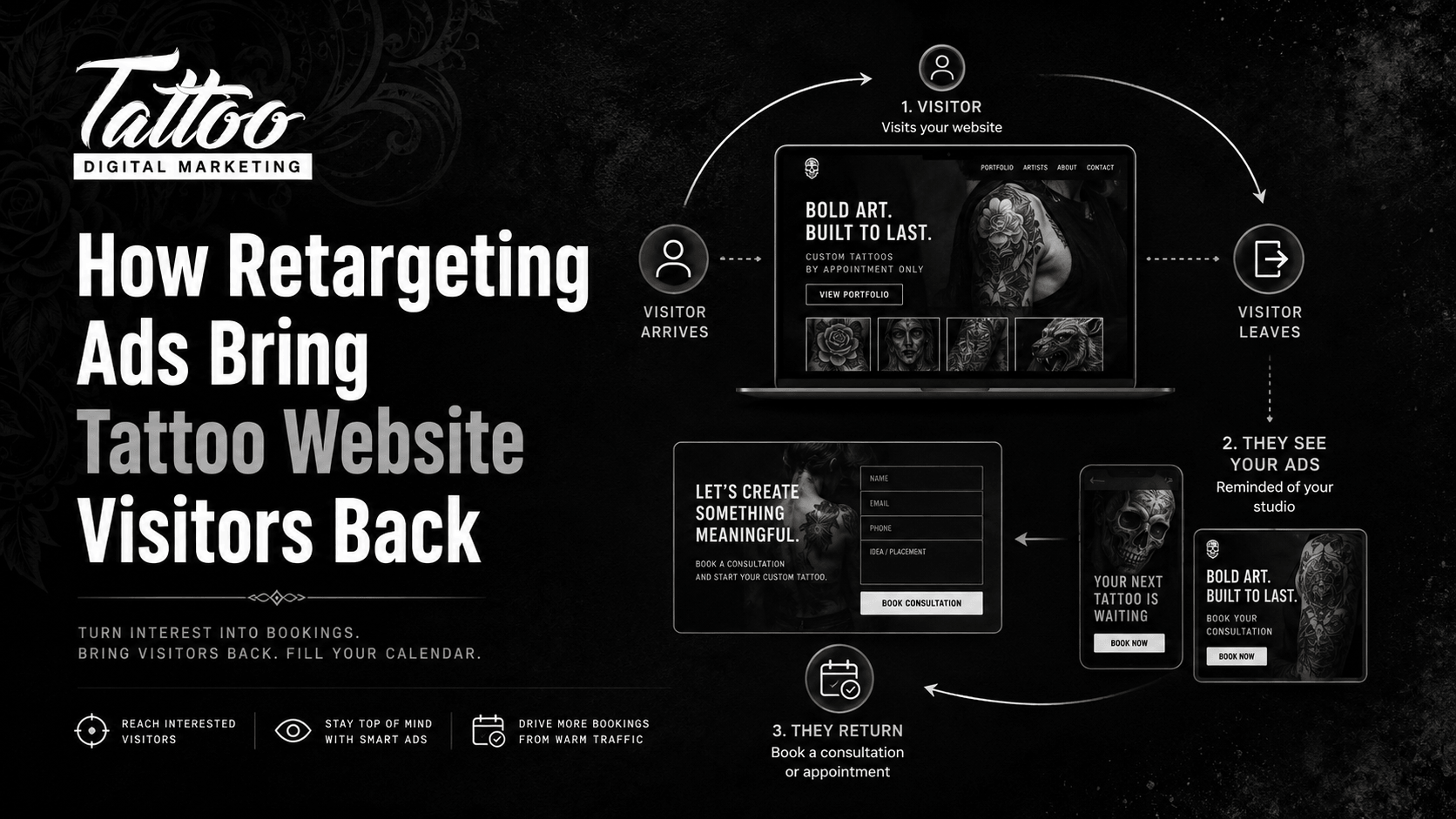
A tattoo website can attract interested visitors who leave before booking. Some are comparing artists. Some need time to think about cost, style, placement, or timing. Others open a portfolio during a busy moment and plan to return later.
Retargeting ads give tattoo shops a way to reconnect with those visitors. The ads appear after someone has viewed selected website pages, helping the studio stay visible during the decision process. A strong campaign can feature recent work, answer a common concern, or invite someone back to complete a consultation request.
For tattoo studios, retargeting works best when the message matches the page the visitor viewed and the level of interest shown.
What Retargeting Ads Do For Tattoo Shops
Retargeting uses website activity to build audiences for future advertising. A visitor may view a realism portfolio, browse a pricing page, read consultation details, or begin a booking form. That activity can place the person into a relevant audience group for a limited period.
The studio can then show ads designed for that stage of the client journey. A visitor who viewed an artist portfolio may see new work from that artist. Someone who reached the pricing page may see an ad explaining deposits and consultations. A person who started a form may receive a reminder to finish the request.
Build Audiences Around Real Booking Signals
Broad website traffic includes people with different goals. Audience groups become more useful when they are based on meaningful actions.
Useful Retargeting Audiences
- Visitors who viewed a specific artist page
- Visitors who explored a specific tattoo style
- Visitors who opened the pricing page
- Visitors who read consultation information
- Visitors who started a booking form
- Past clients who viewed new work
Each group should receive a message connected to the content viewed. This gives the visitor a clear reason to return.
Match The Ad To The Visitor’s Interest
Tattoo decisions are personal, visual, and closely tied to trust. The ad should reflect the artist, style, or booking stage that attracted the visitor.
| Visitor Activity | Ad Message | Suggested Destination |
|---|---|---|
| Viewed An Artist Bio | See Recent Work From This Artist | Artist Portfolio Page |
| Browsed Fine Line Tattoos | Explore More Fine Line Pieces | Fine Line Style Page |
| Checked Pricing Information | Learn About Deposits And Consultations | Pricing Page |
| Started A Consultation Form | Complete Your Tattoo Request | Booking Form |
This structure helps the studio measure which audiences return and which messages lead to consultations.
Use Creative That Feels Like The Studio
Tattoo marketing relies heavily on visual identity. Retargeting ads should look connected to the studio’s website, social presence, and artist portfolios.
Use clear images of finished tattoos with the artist’s permission. Choose work that photographs well and represents the services the studio wants to book. Keep text short enough to read quickly on a phone.
Strong Creative Elements
- A recognizable tattoo style
- The artist’s name
- A short booking message
- The studio logo
- A clear call to action
- Consistent colors and typography
An ad can feature one artist, one style, and one next step. That focus makes the message easy to understand.
Give Visitors A Clear Reason To Return
Retargeting works well when the ad offers useful information or a timely reminder. A studio could promote newly released appointment dates, show fresh portfolio work, explain the consultation process, highlight guest artist availability, or answer a frequent pricing question.
Message Ideas For Tattoo Retargeting
- View our latest blackwork tattoos
- Meet the artist behind this style
- Learn what to expect during your consultation
- Submit your tattoo idea for review
- See current booking availability
- Explore healed tattoo results
Each message should lead to the most relevant page. Sending every ad to the homepage creates extra work for the visitor and weakens the booking path.
Set A Practical Retargeting Schedule
A person researching a tattoo may need several days or several weeks before making contact. Campaign timing should reflect that decision period.
Studios can create audience windows based on visitor intent. People who started a consultation form may be most responsive during the first few days. Portfolio visitors may remain valuable for several weeks. Past clients can receive occasional ads tied to new work or artist availability.
Example Audience Windows
| Audience | Suggested Window | Main Goal |
|---|---|---|
| Form Starters | 3 To 14 Days | Complete The Inquiry |
| Pricing Visitors | 7 To 30 Days | Clarify The Booking Process |
| Portfolio Visitors | 14 To 60 Days | Build Artist Preference |
| Past Clients | 30 To 180 Days | Encourage Rebooking |
The schedule should give visitors enough time to decide and keep ad frequency comfortable.
Protect The Client Experience
Retargeting should feel relevant, respectful, and consistent with the studio’s reputation. Repeated exposure can become frustrating when the same ad appears too often.
Set frequency controls, rotate creative, and remove people who completed the desired action. Review landing pages before campaigns begin so forms, artist information, pricing details, and contact options are current.
The studio should use clear consent settings, approved tracking tools, and the privacy controls required by each advertising platform. A transparent privacy policy helps visitors understand how website data is handled.
Track Actions That Matter To The Studio
Clicks show initial interest. Booking activity gives the campaign more useful context. Track the actions connected to real client movement.
Retargeting Measures Worth Reviewing
- Consultation form completions
- Calls from landing pages
- Booking page visits
- Cost per qualified inquiry
- Deposit requests
- Confirmed appointments
- Rebooking activity from past clients
Review inquiry quality with the front desk or booking team. A low-cost lead has limited value when the request falls outside the studio’s styles, budget, or availability.
Connect Retargeting To The Full Booking Funnel
Retargeting performs better when the website supports the ad message. Artist pages should have strong portfolios, clear specialties, and visible booking steps. Pricing pages should explain deposits and minimums. Consultation pages should tell visitors what information to prepare.
Fast responses, clear expectations, and organized scheduling can help convert returning visitors into booked clients. A campaign can bring a visitor back. The website and studio team guide the next step.
Bring Interested Tattoo Clients Back To Book
Retargeting ads help tattoo shops stay visible during a thoughtful purchase decision. Strong campaigns group visitors by intent, match creative to their interests, lead them to relevant pages, and measure actions tied to consultations and appointments.
Start with a few high-intent audiences, such as artist page visitors, pricing page visitors, and unfinished form submissions. Build clear ads for each group, monitor inquiry quality, and refresh creative regularly. A focused system can turn missed website visits into renewed interest and stronger booking opportunities.