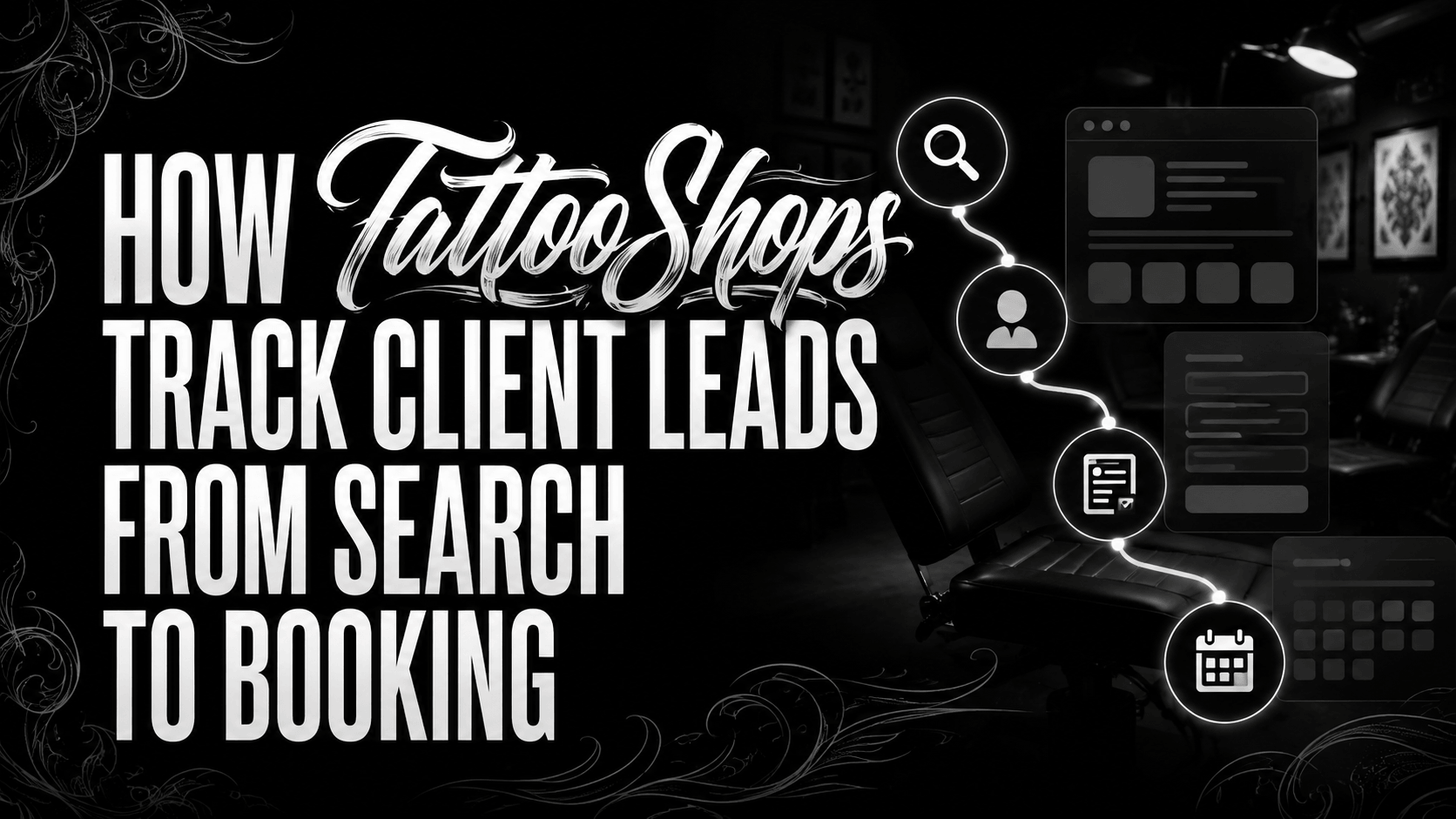
A potential tattoo client may discover an artist through Google, study a portfolio, follow the shop on Instagram, and submit a consultation form days later. By the time a deposit is paid, the original source can be difficult to remember.
Lead tracking shows which channels introduce qualified prospects, which pages encourage inquiries, and how many inquiries become booked appointments. Tattoo shops can use this information to spend with greater confidence.
Define The Tattoo Lead Journey First
Define each stage from discovery through revenue. A basic journey may include:
- Portfolio or artist page view
- Consultation request
- Call, text, or direct message
- Artist review and lead qualification
- Deposit payment
- Appointment scheduled
- Tattoo session completed
Traffic shows visibility. Consultation requests show interest. Deposits and completed sessions show revenue progress.
| Journey Stage | Useful Data To Record | Main Question Answered |
|---|---|---|
| Discovery | Source, campaign, search term, landing page | Where did the visitor come from? |
| Inquiry | Form, call, message, requested style | What prompted contact? |
| Qualification | Budget, placement, size, artist fit | Is this a suitable project? |
| Booking | Deposit, artist, appointment date | Did the lead commit? |
| Completion | Final service value, rebooking | What revenue did the lead produce? |
Track Every Major Marketing Source
Use consistent source labels across the website, forms, booking platform, and customer records. Labels such as Organic Search, Google Ads, Instagram, Referral, and Direct keep reports clear.
Organic Search
Google Search Console can show queries and pages generating impressions and clicks. Website analytics can show what visitors do after arriving. A strong SEO strategy for tattoo shops and artists should connect visibility with consultation requests, deposits, and booked projects.
Record each organic lead’s landing page to identify productive styles, artist profiles, service pages, and local searches.
Paid Advertising
Ad platforms can record clicks and form completions. Connect each campaign with a consultation form, call, or deposit action.
Effective tattoo paid ads and PPC management requires campaign-level tracking. Separate campaigns for fine line, realism, cover-ups, flash events, or individual artists can reveal which offers produce suitable inquiries.
Social Media
Use trackable links in social profiles, stories, posts, and campaigns to identify visits and inquiries from each source.
Clear reporting makes tattoo social media marketing easier to evaluate. Track website clicks, consultation requests, direct messages, deposits, and booked appointments.
Make The Website The Tracking Center
The website connects marketing activity with client actions. Good tattoo web design can support trackable forms, call buttons, artist pages, booking links, and deposits.
Common website conversions include:
- Consultation form submitted
- Phone number clicked
- Text button clicked
- Booking calendar opened
- Deposit page reached
- Deposit payment completed
Thank-you pages can confirm form submissions and create a clean conversion signal. Forms can capture the requested artist, style, placement, approximate size, budget, and discovery source.
Keep forms focused on information the shop uses to assess each project.
Add Tracking Details To Every Campaign Link
Campaign parameters identify the source, medium, campaign, and content behind a visit. Use them for social links, email announcements, flash promotions, artist features, and ads.
Use a consistent naming structure:
- Source: instagram
- Medium: organic-social
- Campaign: fall-flash-day
- Content: artist-story-video
Document the format in a shared sheet and use consistent spelling and capitalization.
Use Lead Statuses That Match The Booking Process
A consultation request should move through clear status labels in a customer relationship management platform, booking system, or spreadsheet.
Useful lead statuses include:
- New inquiry
- Awaiting client details
- Artist reviewing project
- Consultation scheduled
- Approved for booking
- Deposit requested
- Deposit paid
- Appointment completed
- Closed
Record a reason when a lead closes, such as budget, scheduling, service mismatch, location, or artist availability. These patterns can improve content, campaigns, forms, and follow-up.
Decide What Counts As A Qualified Lead
A qualified tattoo lead provides enough detail for the studio to assess the project and fits its services, pricing, location, and scheduling capacity.
Create a short qualification checklist based on factors such as:
- Requested tattoo style
- Preferred artist
- Placement and approximate size
- Budget range
- Desired timing
- Travel distance
- Readiness to pay a deposit
This checklist supports consistent lead evaluation across every source.
Measure The Numbers That Lead To Revenue
Monthly reporting should follow the full booking path through these measurements:
- Lead Conversion Rate: inquiries divided by website visitors
- Qualification Rate: qualified leads divided by total inquiries
- Deposit Rate: paid deposits divided by qualified leads
- Booking Rate: booked appointments divided by qualified leads
- Cost Per Qualified Lead: marketing spend divided by qualified leads
- Client Acquisition Cost: marketing spend divided by new booked clients
- Revenue By Source: completed-session revenue connected to each channel
Review these figures by source, campaign, landing page, and artist. Findings can guide pricing details, qualification, and page promotion.
Account For More Than One Client Touchpoint
A client may encounter the shop through several channels before booking. Save the first known source and the final source connected to the inquiry.
First-source data identifies the introduction. Final-source data identifies the channel connected to contact or booking. Together, they show how search, ads, social media, reviews, and website content contribute.
Review Lead Data With The Team Each Month
Set a monthly review that answers these questions:
- Which sources produced qualified leads?
- Which campaigns generated deposits?
- Which landing pages supported bookings?
- Where did leads stop moving forward?
- Which artists or styles received suitable inquiries?
- What questions appeared repeatedly before booking?
Use the answers to refine a form, add pricing context, improve an artist page, adjust a campaign, or strengthen follow-up.
Turn Lead Tracking Into Better Booking Decisions
Reliable tracking connects marketing activity with booked work through defined stages, consistent source labels, measurable actions, and accurate lead statuses.
Start with existing systems and record information the team can maintain consistently. Cleaner data can reveal which channels attract suitable clients, which pages support decisions, and where the booking process needs attention. Those insights can guide budgets, content priorities, and artist schedules.